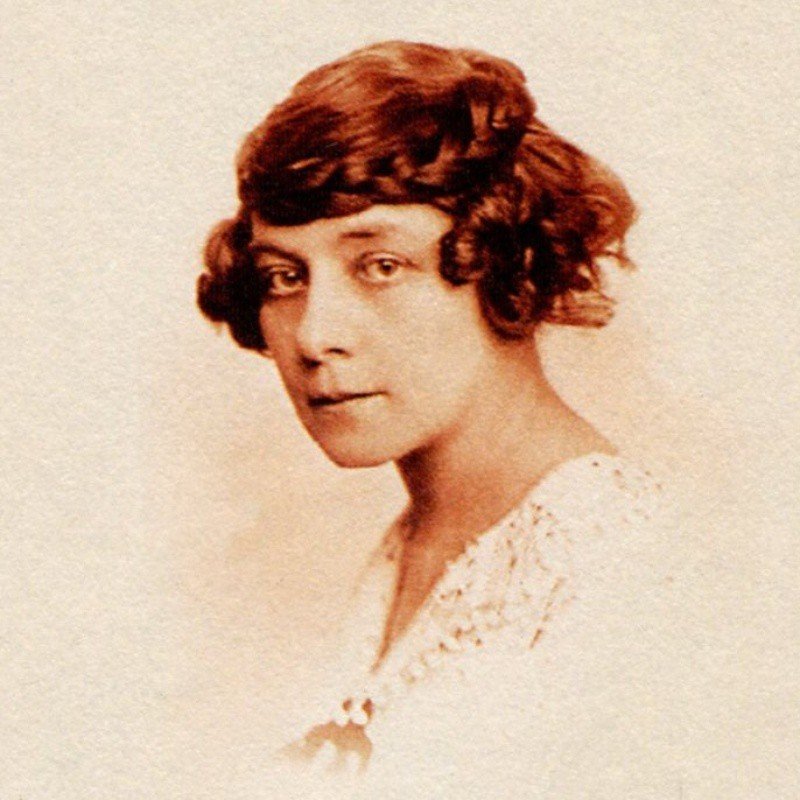
Maja Sjöström was one of the greatest artists in the Swedish textile world. Born in 1868, she was a strong supporter of the Handarbetets Vanner movement, a forerunner of the textile craftsmen’s union, whose ideals were inspired by movements already present in the rest of Europe. By then she was famous in her homeland, in 1924 she moved to Italy and, in Venice, entertained a fruitful collaboration with the Bevilacqua family and their Tessitura.
Dressing One’s Homeland: The Fabrics of Stockholm City Hall
Her style, sophistication, and personal interpretation of nature, reminiscent of Art Nouveau and Arts and Crafts, merged perfectly into her various creations, including the textiles that still decorate the Three Crowns Room in Stockholm City Hall.
This room owes its name to the three chandeliers that hang from the beamed ceiling and whose shape resembles that of a crown. The original drapery fabrics used to decorate the hall are silk brocades embellished with gold and silver threads designed by Maja Sjöström and made by our Tessitura.
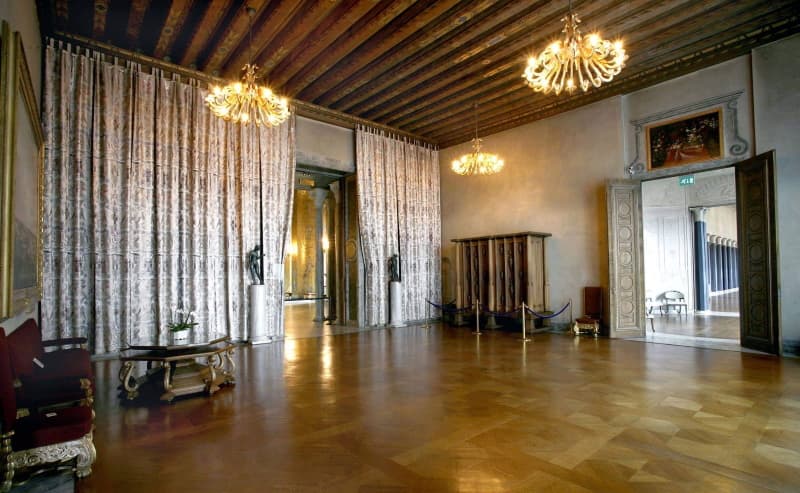
Three Crowns Chamber – Stockholm City Hall
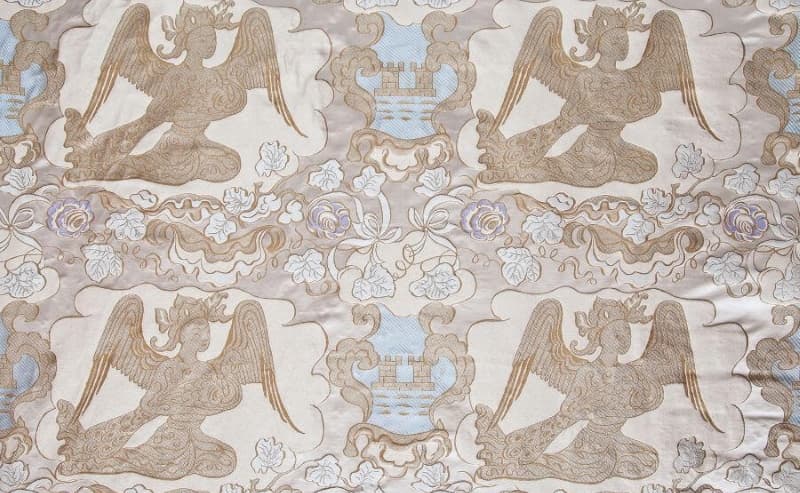
The Three Crowns Chamber’s curtains by Maja Sjöström – detail
For the same room, the Swedish artist designed a fabric that our Tessitura made and that was used to cover some of the armchairs. This pattern, which for a certain period was erroneously attributed to the Venetian painter Guido Cadorin, is still found in our collection: the Maja Lampas.

Maja Lampas
In addition to these works, Maja Sjöström, together with Tessitura Bevilacqua, also realized floral brocades for the armchairs that are currently located in the Oval Room of the City Hall.
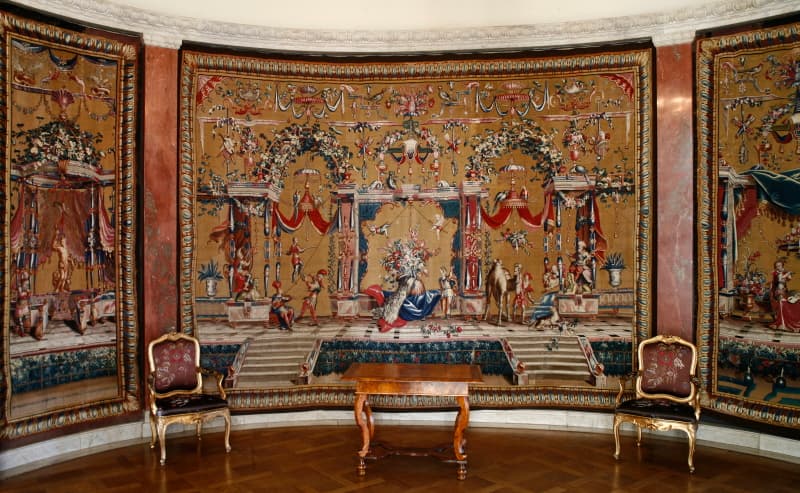
Oval Room – Stockholm City Hall
The Stockholms Stadshus, whose construction began in 1911 under the direction of architect Ragnar Östberg, was inaugurated in 1923: the textiles created by Maja Sjöström for the symbol of the Swedish capital may be considered as her final farewell to her country.
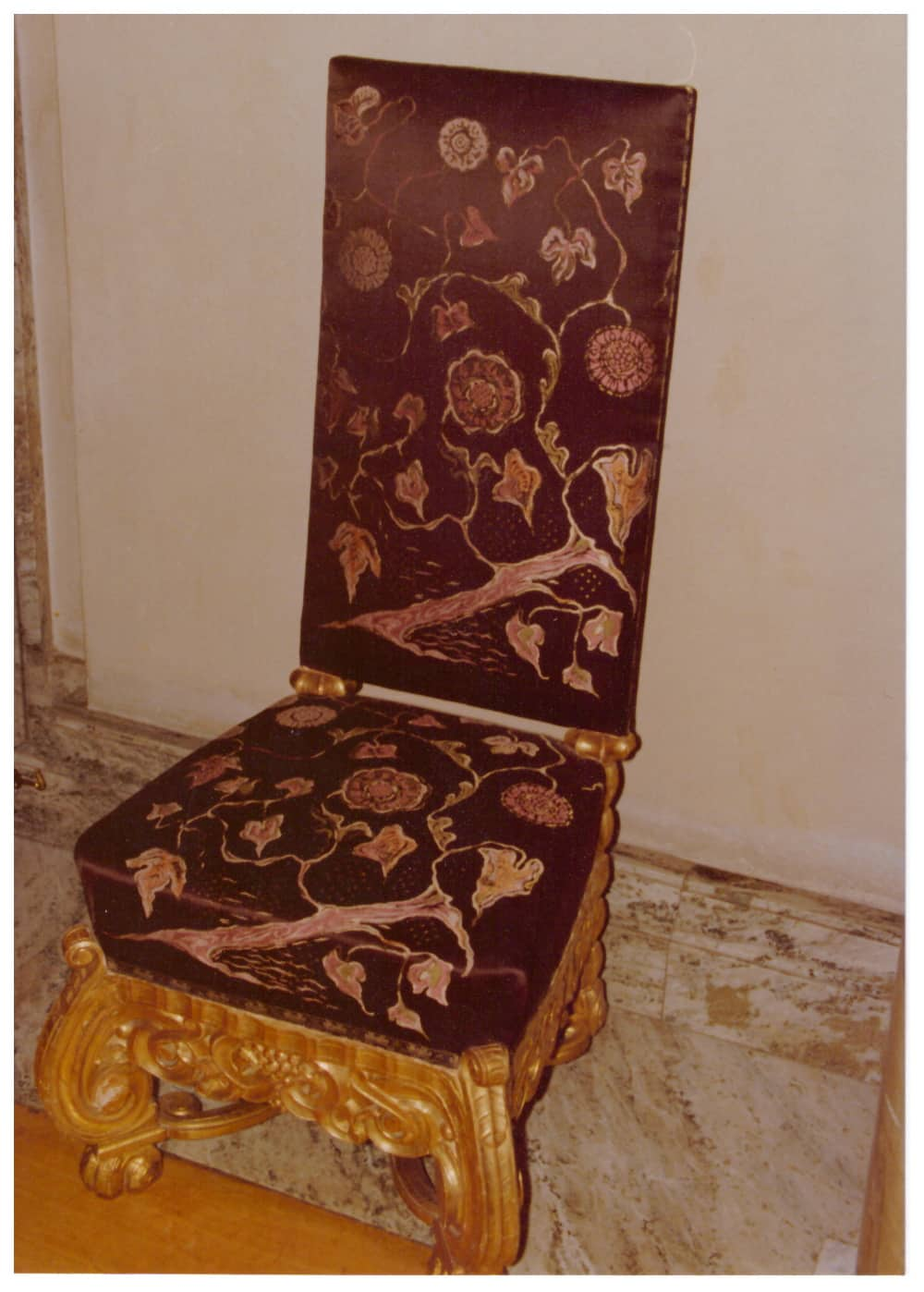
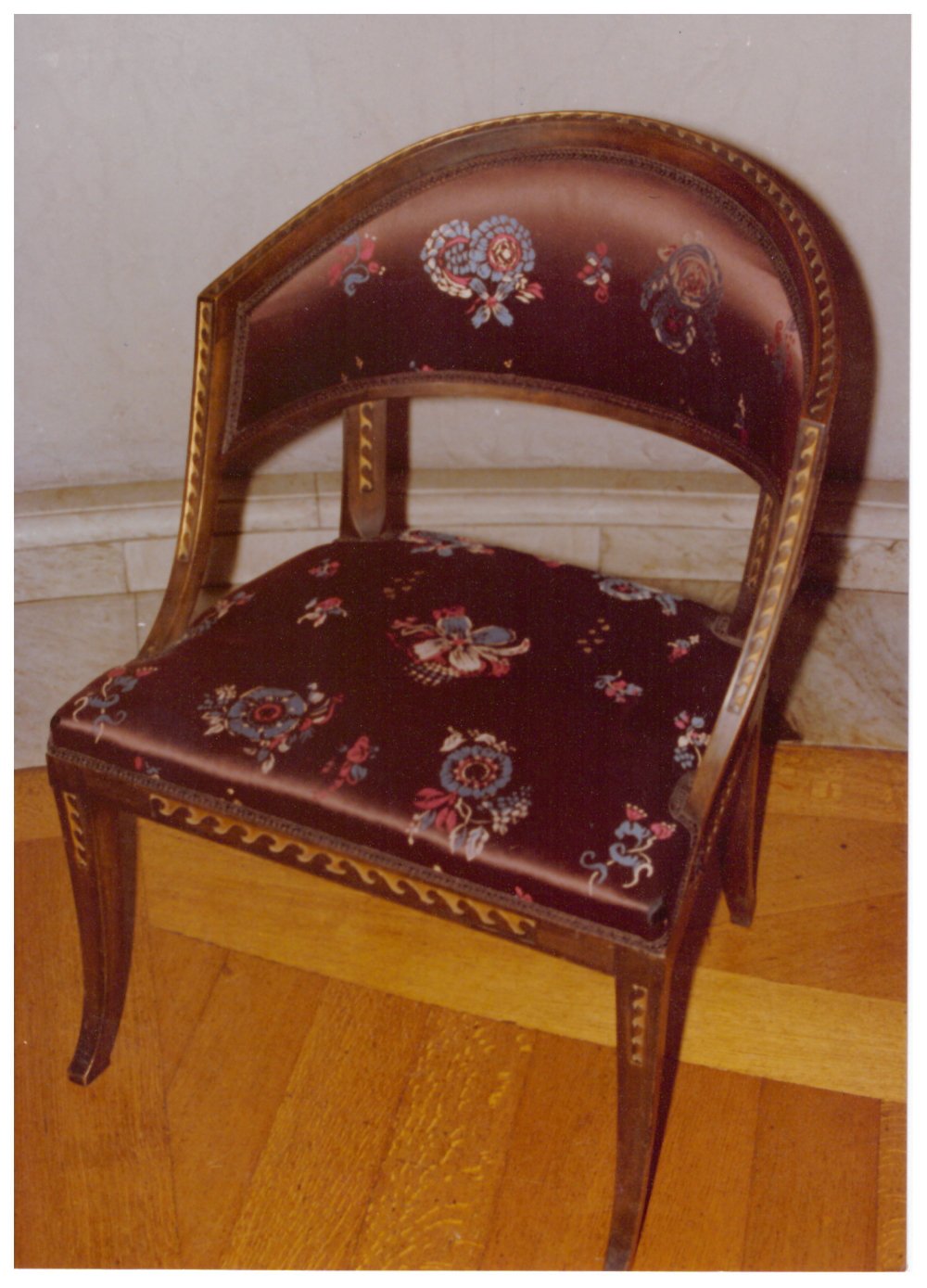

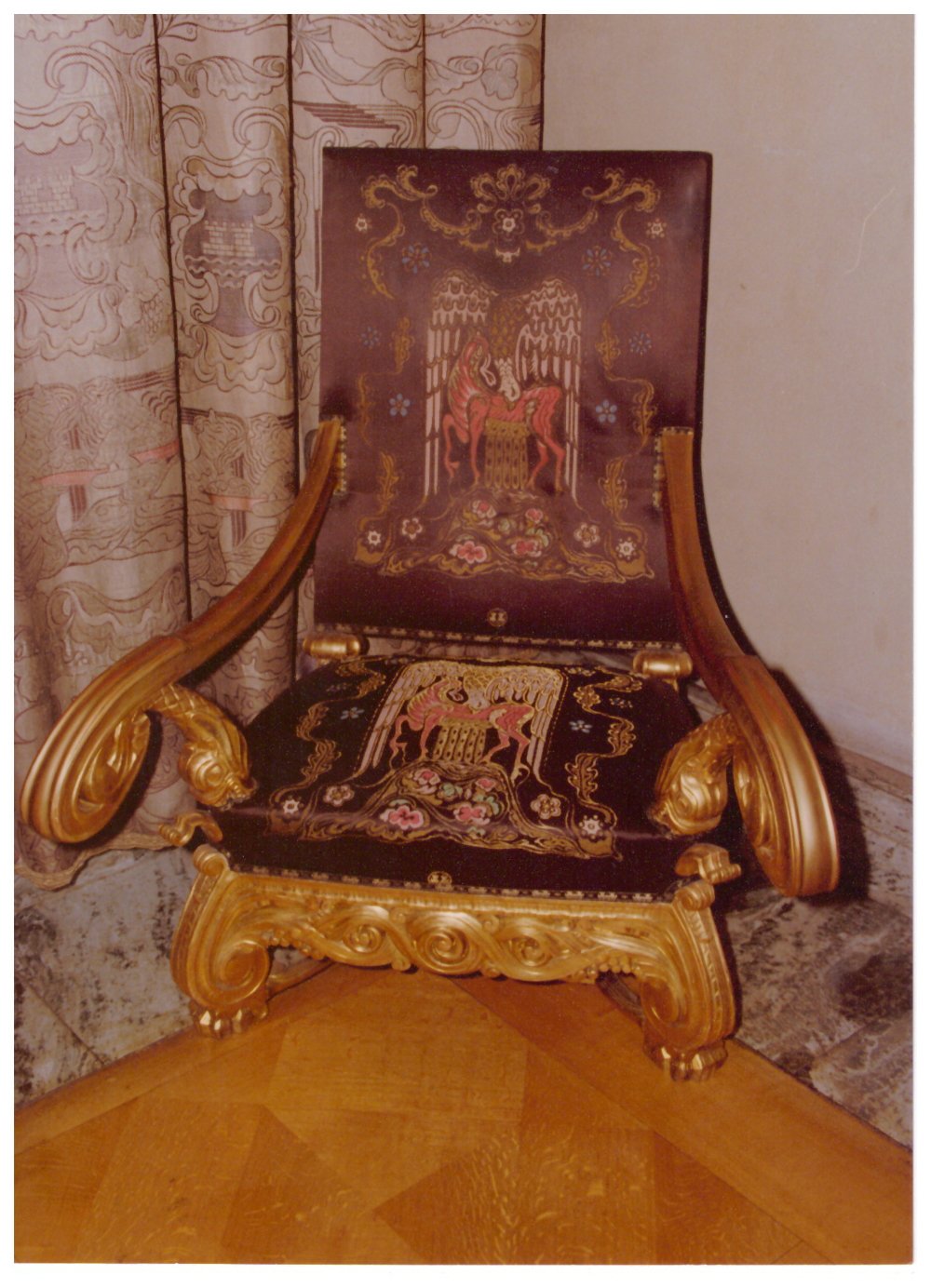
Brocades by Maja Sjöström and Tessiture Bevilacqua – Archive Images
A Melting Pot of European Cultures
This separation, however, was merely physical, for she brought with her from Sweden to Italy the distinctive style of Scandinavian tapestry of the time. Unlike contemporary works from the rest of Europe, Nordic weaving did not merely reproduce nature with an intimate gaze, but rather unveiled its mysteries, weaving into its patterns the spirits and creatures that populate the imagination of its people.
In the 1920s, when Italian fabrics featured much more geometric patterns typical of Art Deco, the Art Nouveau style still held strong in Sweden. This style drew inspiration from nature and incorporated natural decorative elements with a touch of fantasy, elegance, and exoticism, as seen in the Svezia lampas.
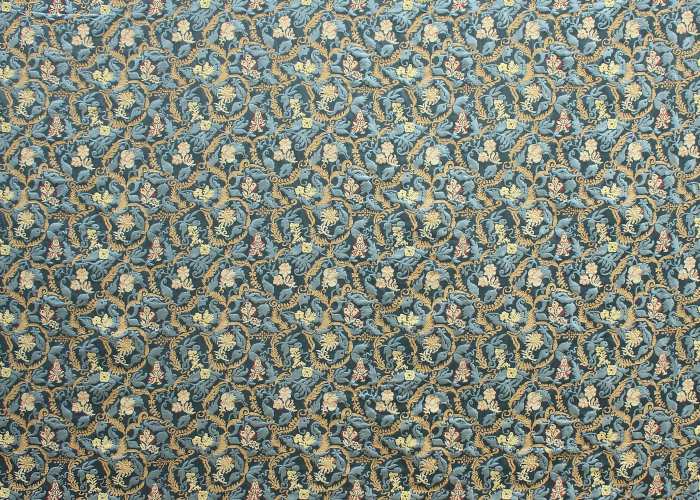
Svezia Lampas
This lampas is characterized by a floral pattern dominated by curved lines, particularly in the flower stems, which has been used in prestigious projects:
- on a pearl-colored brocade, handmade for a gala gown worn by Queen Louise of Sweden in 1950. This gown, crafted by the haute couture atelier Tunborg & Co in Stockholm, is now housed at the Royal Armory (Livrustkammaren), the Swedish national museum located in the Royal Palace in Stockholm;
- on a hand-woven brocade in shades of ivory, blue, and orange for the Royal Palace of Kuwait in 1950;
- on a lilac, light blue, and light green lampas, produced on a mechanical loom for the Royal Palace of Oman in 2011.

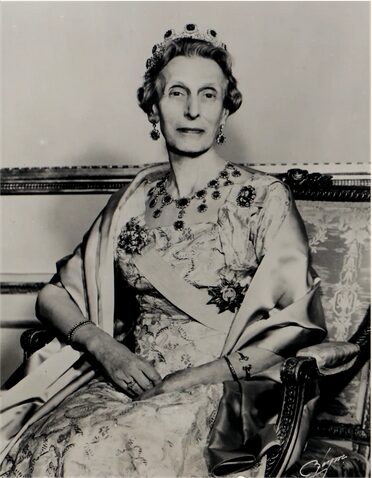
Queen Louise of Sweden
Throughout her career, this artist has managed to achieve balance and harmony of expression that made her work part of the European artistic heritage, joining the ancient Swedish textile tradition in the contemporary world.
The Merging of Swedish and Venetian Textiles Tradition
Maja Sjöström was the forerunner of great collaborations between Tessitura Bevilacqua and numerous Swedish textile artists that, starting in the 1920s, commissioned Bevilacqua to create damasks for liturgical vestments of the Swedish Church.
The close commercial and cultural relationship of the Tessitura Bevilacqua with Sweden at the beginning of the 20th century came from the fact that the grandmother of the current owners of the Tessitura was Swedish, which allowed us to make ourselves known in that country and to work for the Swedish royal family.
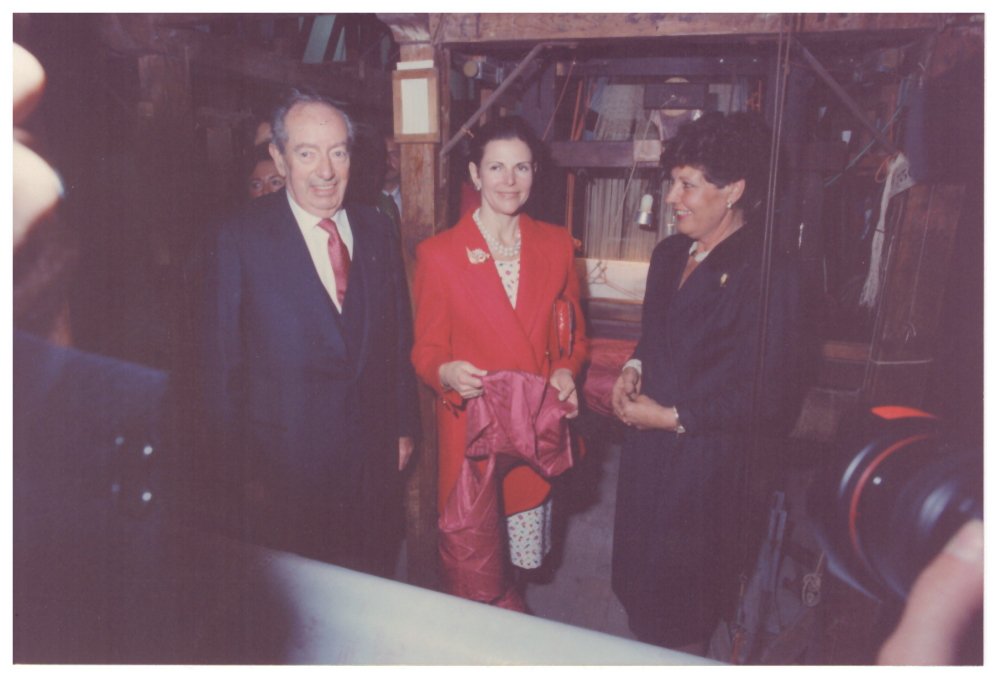
Luigi Bevilacqua with Queen Silvia of Sweden visiting our Tessitura – 1991
In our archives, we have found numerous sketches, drawings, and watercolors of the graphic motifs for the punched cards used in the weaving process, designed by renowned Swedish studios for the Church and made by our Tessitura in the past century. Among these studios were Licium, Libraria, Ersta, and Pro Ecclesia to name just a few.
Margaret Ridderstedt, curator at the National Council for Cultural Heritage of Sweden, used this material for her book “Veneziansk Sidendamast” (“Venetian Silk Damask”). The book offers an overview of the great artistic production of sacred textiles designed in Sweden and made in Venice since the early 1900s, also telling the story of the Bevilacqua family and the production process of their Tessitura.
Cover Photo: Svezia Lampas in Pink